Showing posts with label family. Show all posts

Friday, January 24, 2014

The Oregon Coaching Family: Oregon’s True Legacy Is In Its Family of Coaches, Not Uniforms

The Oregon Coaching Family: Oregon’s True Legacy Is In Its Family of Coaches, Not Uniforms

Originally posted on CampusAttic.com on January 2nd, 2014


    It’s easy to recite the perception of Oregon’s legacy on athletics — flashy uniforms, modern facilities, speedy style of play, Nike connections…but is this really the biggest impact on sports that the University of Oregon has had? It seems strange to think, but sleepy little Eugene has been a crossroads of coaching knowledge for a century, a must-stop on the path to success either as a player or coach; call Oregon the Harvard of X’s and O’s.

    At the heart of Oregon’s coaching tree is a pledge of continuity, a place where a coach if they want to can come and remain for many years. The life of a coach can pay well, but also be very nomadic, moving repeatedly wherever the work beckons. Oregon is the contradiction to this, a place where stability in the staff is highly sought after, in a community with a relatively low cost of living and great place to raise a family, with a football program that is beloved and supported, making for a winning and desirable combination for any coach. Above all, the coaches at Oregon exemplify teaching skills the right way, with integrity, as a family, helping to mold young men and women into positive members of society.

Mark Helfrich just completed his first year as head coach at Oregon,
but has been groomed of ryears for the job. (courtesy: USAToday)


    Mark Helfrich is the 35th University of Oregon head football coach, having just completed his first year at the helm after serving four years as offensive coordinator, but half of those 35 that have held the highest job were prior to 1913.

     In college football today, where it is rare for a coaching staff to stay fully intact from one year to the next, that stability is a reflection of doing things the Oregon way, trusting in the coaching knowledge, and considering long-term plans to achieve. When fans overreact and call for blood if something doesn’t go perfect, the administration shows loyalty, a rare trait in modern college athletics, and the results speak for themselves. Len Casanova was once hung in effigy on the UO campus by angry students in the 1950s, but the university didn’t cave to the demands…he stayed at Oregon for decades thereafter, and led Oregon to a Rose Bowl in 1958.

    There is perhaps no healthier athletic program in the country at a public university than Oregon, fiscally solvent, highly successful in competition in every sport, and a stable of top-level talented coaches with the rarest of promises — job stability. As a result, Oregon sports across the board are competing among the highest levels in the country.

     Acrobatics & tumbling are three-time national champions, men’s and women’s track & field are perennial title contenders, baseball and softball are likely to reach the college world series, men’s and women’s basketball teams both lead the nation in scoring per game, football every year is in the national title discussion, and Oregon club sports even won a national championship in ultimate frisbee.

     Sports are alive and well at Oregon, because of a dedicated effort on the part of the university to find and maintain the best coaches, while also molding the brightest sports minds in-house.

Hugo Bezdek left Oregon in 1918 for the Pittsburgh Pirates
after Shy Huntington was set to take over the program.


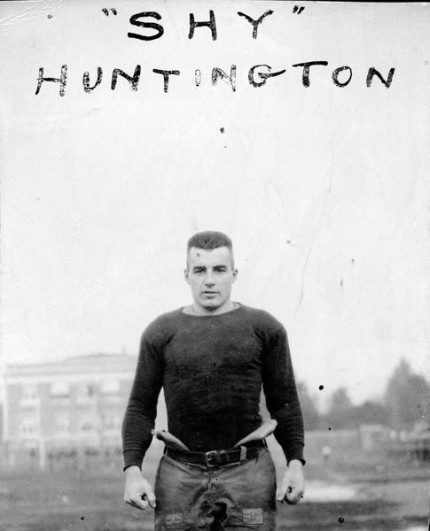
    It began in 1913, when Hugo Bezdek was welcomed back to Eugene after one year in 1906 as the football, basketball, and baseball coach. Bezdek remained in Eugene through the 1918 season, establishing Oregon as one of the premier teams on the west coast, culminating in victory in the East-West Tournament game, later known as the Rose Bowl, in 1917. When Bezdek left for a job as manager of the Pittsburgh Pirates, to maintain coaching staff continuity and continue the good times Oregon hired Charles “Shy” Huntington as new head coach, Oregon’s quarterback during Bezdek’s coaching tenure. The good times did continue, Oregon returning to the East-West Tournament game in 1920…until the university’s attempts to bring Bezdek back resulted in Huntington resigning in 1924, ending an era and sending Oregon into a rather dark time for UO athletics.

    For decades Oregon went through numerous coaching changes, until Len Casanova was hired from Santa Clara before the 1951 season. Following the Bezdek/Huntington continuity mold, Casanova established a coaching tree that has become one of the greatest in football history. Whether during the 16 years Casanova remained Oregon’s head coach, or the many decades that followed with “Cas” as athletic director and senior administrator at Oregon. When Casanova left his post as head coach, he appointed his successor to be Jerry Frei, the offensive coordinator, maintaining much of the same coaching staff.

    In the 1970s the university strayed, firing Casanova’s successor Jerry Frei and starting over with two underwhelming short tenures under coach Dick Enright (1973-1974) and Don Read (1975-1976). Replacing Read in 1977, an Oregon State alumnus was hired, Rich Brooks. Ever since, the Casanova long-tenure mold has been followed, the university becoming the prime example of maintaining coaching continuity and stability, the envy of the college football world.
    It is the patience shown by the university and long-term forward thinking that allowed the University of Oregon football program to prosper and grow into the perennial national contender it is today, something that would not have been possible had the quick trigger in changing coaches in the post Huntington 1920s or post-Frei 1970s had continued.

     Just as Casanova had supported his guys through good times and bad trusting in coaches to develop their plans without a “win now or else” mentality, so too did Rich Brooks show immense loyalty to coaches, making Oregon a welcomed place for coaches to come to ply their trade and learn. This has continued today, as Rich Brooks’ successor was his offensive coordinator Mike Bellotti, who after a 13-year tenure turned over the job to his offensive coordinator Chip Kelly, who turned it over to his offensive coordinator Mark Helfrich, and so the cycle of success continues.

Legendary track coach Bill Bowerman is one of many Oregon alumni who returned
to their alma mater to coach. (courtesy: UO Knight LIbrary and Special Collections)


    The Oregon way of long-term coaching support expanded beyond just football. Bill Hayward (1903-1947) spent over 40 years at the UO training athletes as track & field coach and football trainer, his successor being a former UO football player, Bill Bowerman. Bowerman revolutionized the sport of track & field in numerous ways, brought Eugene its first T&F national championship in 1962, and co-founded Nike with one of his former runners–Phil Knight.

     Bowerman’s successor was Bill Dellinger, one of Bowerman’s greatest athletes. On the women’s side, Tom Heinonen coached track & field for 28 years (1975-2002), bringing numerous titles to Eugene further establishing the “Track Town USA” reputation.

   Other sports have benefited from Oregon’s long-term loyalty. Howard Hobson (1935-1947) brought a basketball national championship to the UO in 1939. Dick Harter’s “Kamikaze Kids” were the second best team on the west coast in the 1970s during his stretch as coach (1971-1978), and it was one of Harter’s former players in Ernie Kent that returned Oregon to prominence twice reaching the Elite Eight in the NCAA Tournament during his time as coach (1997-2010).

Don Kirsch surrounded by some of his players after Oregon clinched a spot
in the college world series in 1954.
(courtesy: UO Knight Library and Special Collections)

 
     In baseball, Howard Hobson had coached on the diamond as well as on the basketball court for years, so when he left it was one of his former players in Don Kirsch who took over and led Oregon from 1948-1970, taking the Ducks to their only college world series appearance in 1954, before handing the team over to one of his former players, Mel Krause, who lead the program until it was cut due to budget cuts in 1981.

     Becky Sisley coached multiple sports at Oregon, and became its first women’s athletics director, during her extensive time at the university (1965-1979). Jim Radcliffe, the best strength & conditioning coach hands down in the entire country, has been working with every sport at the University of Oregon since he came to Eugene in 1985, following in the tenured trainer tradition of Bill Hayward (1903-1947) and Bob Officer (1935-1967).

    Recognizing a theme here? The University of Oregon knows a good thing when it has one, and looks to maintain the success through long-term support of its coaches and support staff. When a coach isn’t worried if they have to move after every off-season, they can look big picture at ways to maintain and improve on success, and establish an identity for the sport. The result, Oregon has its own #NationalBrand, not just in appearance, but style of play. Find the brightest minds in a sport, then hold onto them. It seems a simple concept, but easier said than done.

John Robinson may be a hall of fame coach for his time
at USC, but he started as a player and coach at Oregon.
(courtesy: UO Knight Library and Special Collections)


    14 college/NFL hall of famers have roamed the Oregon sidelines, and the pantheon of individuals who have at one time donned an Oregon jersey or taught the X’s and O’s is as impressive as any school or pro franchise. The list of coaches with Oregon roots that spent time in the NFL include Norm Van Brocklin, George Seifert, Mike Nolan, Bill Musgrave, John Madden, John McKay, John Robinson, Hugo Bezdek, Gunther Cunningham, Rich Brooks, Charlie Waters, John Ramsdell, Bruce Snyder, and Chip Kelly among others.

     Homegrown coaches at Oregon who went on to great success in the coaching ranks include Chris Peterson, Dirk Koetter, Jeff Tedford, Bob Toledo, and Al Borges among others. Norv Turner and Justin Wilcox played at Oregon before going on to become successful coaches elsewhere.

    Part of the Oregon legacy in coaching is the result of University of Oregon student-athletes choosing to cut their coaching chops at their alma mater. John Robinson and John McKay may have become legends at USC, but it was at Oregon where they played and first coached under Len Casanova’s tutelage. Denny Schuler, Brad Ecklund, and Joe Schaffeld also played at Oregon, then returned as coaches involved in college football for decades. Prink Callison, Norm Chapman, Bev Smith, Bill Bowerman, Bill Dellinger, Don Kirsch, Mel Krause, Sally Harmon, Don Pellum, Joe Reitzug, Nate Costa, Steve Greatwood and others have stayed as Duck coaches after their competition days were done. Norm Van Brocklin famously wanted to return to revitalize the program in the 1970s after his NFL coaching career ended, but Rich Brooks was chosen for the head football coach position instead.

    In fact, the Oregon coaching factory has been so successful in developing sports minds, that it prompted the football program to completely change its philosophy. By the early 2000s, the Pac-10 was swamped with former Oregon coaches at other schools implementing “the Oregon way” into other schools.

    By 2003 in some games Oregon played, both teams were using the same playbook and hand signals, everyone knew the Oregon system so well that a change was needed. In one game, Oregon quarterbacks Kellen Clemens and Jason Fife actually had to sprint to the sideline after every play to hear the play call knowing that the team couldn’t use any hand signals without the opponents knowing what Oregon was about to run next.

Becky Sisley personified Oregon’s coaching family legacy and versatility
coaching basketball, field hockey, softball, and becoming the first
UO women’s athletic director.
(courtesy: UO Knight Library and Special Collections)

 
    Hence it was that in 2005 head coach Mike Bellotti decided it was time to switch from a pro style offense to a spread system, in part to evolve with the changes in football but also a means to avoid other schools from mimicking Oregon to the tiniest of detail. With Jeff Tedford at Cal (Oregon offensive coordinator 1998-2001), Dirk Koetter at ASU (Oregon offensive coordinator 1996-1997), Tom Osborne at ASU (Oregon special teams coach 1995-2000), and other assistants with Oregon roots scattered throughout the west, there was too much familiarity in Oregon to keep any opponents surprised.

    Since the 1980s, the Oregon football staff has remained relatively unchanged, at least compared to other programs. The longevity of running backs coach Gary Campbell (1983-present), offensive line/tight end coach Steve Greatwood (1980-1994, 2000-present), linebackers coach Don Pellum (1985-1986, 1993-present), and strength & conditioning coach Jim Radcliffe (1985-present) are true rarities in the quick trigger win-now-or-else high stakes world of college football. Mike Bellotti came to Oregon in 1989 as Rich Brooks’ new offensive coordinator, and stayed in multiple roles until 2009. The staff today has its roots tracing back to Rich Brooks’ hire in 1977, during which time facilities development have completely altered Oregon football.

    It was during Rich Brooks’ time as coach (1977-1994) when he and then athletic director Bill Byrne implemented plans to upgrade the facilities at Oregon to make the program competitive, something that would not have been possible if not for a dedication to Brooks’ big picture vision for the program. Fundraising by Byrne in the early 80s led to the construction of the Autzen Stadium Sky Suites in 1986, which then funded much of the Casanova Center construction in 1989-90. From there the athletic department is almost completely unrecognizable from what it was in the 1980s, every sport’s facility either being replaced or getting massive upgrades to coincide with the multiple image and marketing campaigns. With the shiny new facilities has come success in athletics and national attention for the university, providing student-athletes with the tools they need to achieve at their absolute best.

    Consider for a moment the Chip Kelly head coaching tenure (2009-2012). During those four years Oregon was the only program in the entire country that did not have a single change in its coaching staff. During that same four year stretch, Oregon was the only program in the country to play in a BCS game every year…coincidence?

    When Kelly left following the 2012 season, he did so only after assurances that his offensive coordinator Mark Helfrich would take over, and pledged not to completely gut the entire Oregon coaching staff in his departure, maintaining the core structure per tradition established under Bezdek and Casanova and Brooks. Helfrich has been groomed for the job, a native Oregonian who was recruited by the Ducks, played high school games at Autzen, knows the history and tradition of the program, and like so many others got his coaching start at the University of Oregon as an assistant.

    But as much stability as there can be amidst staff, when humans are involved eventually change must occur. The first cog fell last week, when Nick Aliotti retired, leaving a current vacancy in Oregon’s defensive coordinator position.

Sometimes goat, sometimes great, Nick Aliotti’s always honest and gruff approach
will be sorely missed. (courtesy: OregonLive.com)

    Nick Aliotti was a running back at UC-Davis in the 1970s when Mike Bellotti was an assistant coach at his UCD alma mater. Aliotti coached for a year alongside Bellotti at UCD in 1976, before joining the Oregon coaching staff in 1978 under Rich Brooks.

     In 1980 he joined Oregon State for four years as the running backs coach, but in 1988 he returned to Oregon, a year before Mike Bellotti would join the Ducks, playing an integral role in getting Bellotti to come to Eugene. There were stints for Aliotti in the NFL alongside Rich Brooks, who also took Steve Greatwood with him to the St. Louis Rams in 1995 when Mike Bellotti took over as head coach, but after a year at UCLA Nick Aliotti returned to where he was most comfortable in 1999 — the University of Oregon.

    For years Aliotti has been the stabilizing force behind Oregon’s defenses. Sometimes a scapegoat, sometimes a hero, always brutally honest, his character and personality helped to define the family atmosphere of the coaching staff that has drawn so many student-athletes to Eugene. His loss is huge, and it will be interesting to see if Oregon chooses to continue the continuity that has led to so much success in the past, by hiring from within, or do they go outside and bring in a fresh face?

    Behind Greatwood, Campbell, Pellum, and Radcliffe are the second generation of Oregon coaches. Tom Osborne has coached tight ends and special teams in two stints at Oregon (1995-2000, 2007-present), and secondary coach John Neal (2003-present). If there is to be an internal successor to Nick Aliotti at defensive coordinator, it is likely John Neal, the good money being on the announced “national search” for a new defensive coordinator actually being a hunt for a replacement secondary coach after Neal is promoted.

There is nobody more respected or appreciated in the UO
athletic program than strength & conditioning coach Jim Radcliffe.
(courtesy: OregonLive.com)

 
    There will come a point where sadly Steve Greatwood, Gary Campbell, Don Pellum, and (gasp) Jim Radcliffe will have to retire too, the final remnants of the Casanova/Brooks lineage.

    Yet the coaching tree will live on under Helfrich’s eye whenever the stalwarts of Oregon choose to call it quits on their terms, just as Aliotti did. The next wave of coaches that clamor to call Eugene home will come, knowing it is a place where if they so choose they can set up a home for many years to come.

    Oregon is special. It’s not because of the uniforms, or facilities, or fans, or community, but a combination of all of the above; but at its very core it is the people teaching the X’s and O’s who keep the Oregon coaching factory running at full steam. It is both a factory and a family, the humans who operate the machines that are the true value, not the structures popping up each year that define Oregon.

     As long as that policy is maintained, as long as the administration and fans show trust and loyalty in the long-term plans of coaches to compete, then Oregon will continue to be successful at the highest levels of amateur athletics.

Len Casanova (left) and Jerry Frei (center) were two of the major cogs in the lineage of coaching success at Oregon that has continued through to today. (courtesy: UO Knight Library and Special Collections)

Thursday, January 23, 2014

Family Connections Run Deep at Oregon

 Family Connections Run Deep at Oregon

Originally published on FishDuck.com on August 24th, 2011
 
The Oregon Ducks football team is a family.

This is something stated often, the family atmosphere that surrounds the football program and its connection to the community.  It’s an easy thing to claim, but difficult to fully comprehend until seen first-hand.

It starts at the top, with the majority of the Oregon Ducks coaching staff having been a part of the team for decades, possessing a deep understanding and respect for each other.  It is a conscious effort by the coaches to treat each student-athlete with respect and love as if they were all family.

For all the fancy facilities and Nike gear, speak to any past or present Oregon Duck student-athlete and the first thing they will talk about is the family atmosphere at Oregon, the respect everyone has for each other, the brotherhood that exists that has fueled Oregon’s success. It is understandable for a team to think of itself as a family, considering the time commitment.  Practice, film study, classes, study hall, treatment, training table, workouts; the time dedication involved by the coaches, staff, and players leaves little for much else.

Yet unlike at some other schools, Oregon openly embraces making sure that people have a life outside of football, and coaches maintain an open door policy to be able to talk about anything at any time.  Speak to former student-athletes today, and they still look at their Oregon coaches as father figures, some even go so far as to refer to coaches as “dad” when they see them.

There is a special bond that exists, the Duck brotherhood, this fraternity of Oregon football, often preached at other programs too but rarely embraced as wholeheartedly as at the University of Oregon.  It has been entrenched for decades, as long as some of the current coaches have been tenured at Oregon, long before the Casanova Center and Mo and all the Nike toys ever became a realization.

So if every player considers their teammates as brothers and family, what does it mean when there are actual family bloodlines involved in the program?  Is there a shadow, a legacy, to perform above and beyond as family has previously done at Oregon?  Does having family previously or currently associated with the program make the transition to college easier?  Is the shadow and outside pressure of expectations to perform up to the legacy of the last name too much to overcome?   And does following in the same position played by their famous relative add extra pressure to live up to great expectations?

I spoke with numerous past Oregon players with family ties within the program to find out what it means to not only be a Duck representing the school, but representing a known family name as well.
“Having actual family ties on the team takes it to another level,” said Brandon McLemore, Oregon Ducks safety (1995-99), whose older brother Cristin McLemore was a star wide receiver for Oregon (1991-95).  “You have U of O on your chest and your family name on your back, and you will do anything to represent both positively.”

 
Brandon McLemore followed his brother Cristin to Oregon and made quite a name for himself as a starting safety in the mid-90s.
 
Oregon has had plenty of direct family ties over the years stretching back to its earliest days.  Over the years many sons have followed in the footsteps of their fathers and uncles, also donning the green and yellow to fight for the University of Oregon like their elders had done previously.  Brothers have played side-by-side or followed their siblings to battle after their family legacy was already etched in the record books.

From Oregon’s Huntington duo, Charles (nicknamed “Shy”) and Hollis, leading the Webfoots to victory in the 1917 Rose Bowl, up to present day, family bloodlines run deep.  Some names have become Oregon Ducks royalty through the efforts made by multiple members of the family.
 

Charles "Shy" Huntington and his brother Hollis were the driving forces behind Oregon's 1917 Rose Bowl victory over Penn. Photo courtesy: University of Oregon Libraries – Special Collections and University Archives.
 
John Harrington was the starting quarterback in the first game ever played at Autzen Stadium, three decades later his son Joey became one of the greatest quarterbacks in Oregon history.


Joey Harrington followed in his dad’s footsteps at Oregon, also becoming a starting quarterback for the Ducks.
 
Eric Winn played fullback with the Ducks going from walk-on to 1st team all-conference fullback, the 4th Winn to suit up for the Ducks after his dad Dick Winn, uncle Harvey Winn, and cousin Mark Winn had all previously played for Oregon.

 
Eric Winn went from walk-on to 1st team all-conference player for Oregon, carrying on the Winn name with the Ducks after his dad Dick, uncle Harvey, and cousin Mark had all previously played football for the Ducks.
 
Mike Fouts followed his uncle Dan Fouts to Oregon in the 1970s.

Mike Fouts played at Oregon while his famous relative Dan Fouts was establishing an NFL Hall of Fame career. Mike would join Dan in the pros for a few years after a successful career at Oregon.
 
Then there is the Wilcox family, brothers Dave Wilcox and John Wilcox both played as Ducks (Dave recently being named one of the top NFL linebackers of all-time and one of seven Oregon Ducks in the NFL Hall of Fame), while Dave’s sons Josh and Justin both had memorable careers with the Ducks in the 1990s.
 

John Wilcox played at Oregon, as did his brother Dave. Dave Wilcox's two sons Josh and Justin would later have prolific careers as Ducks in the 90s. Photo courtesy: University of Oregon Libraries – Special Collections and University Archives.
 
The trend has continued recently and will do so well into the future, as Brian Butterfield recently graduated after four years as a safety while his younger brother Ben is a sophomore wide receiver, and the Ducks have a pair of brothers currently committed to join the team next year, Eric and Stephen Amoako.

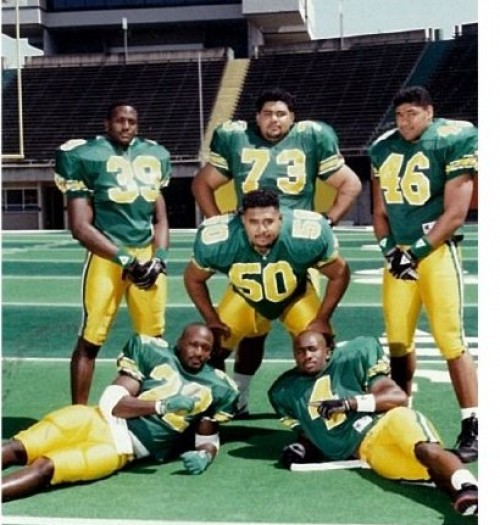
Over the last two decades alone, Oregon has had a wealth of siblings become Ducks.  Patrick Johnson and Dan Johnson, Josh and Justin Wilcox, Markus and Jordan Kent, Matt and Simi Toeiana, Dan and Jed Weaver, Brian and Spencer Paysinger, and the unforgettable Malepeai trio Silila, Tasi, and Pulou, are just a few of the family members that have all donned the green and yellow for Oregon.
 

The Malepeai brothers Silila (#50) and Tasi (#73) were imposing forces for Oregon in the 90's
 
Yet despite the family ties, it is interesting to hear that for many the last thing they wanted to do was follow in their older sibling’s shadow, but once on campus the family atmosphere established by the team and coaches as a whole enticed them to become Ducks anyway.

“Cristin was very distant when it came to my recruiting, he wanted me to be my own man,” reflected Brandon McLemore. “Oregon was my last choice when I went through the recruiting process, but all the hosted recruits had such a familiar vibe…it felt like a family, everyone got treated really well, it was authentic, and I decided I wanted to be a part of it too.  When I chose Oregon I wasn’t actively looking for that added challenge because my brother was there, I wanted to make my own name.”
 

The McLemore brothers Cristin (left) and Brandon (right) enjoy tailgating with their father before a game, still big Oregon supporters years after their playing days.
 
For others though, the family ties all but determine well in advance that they will someday be Ducks.  Some achieved equivalent or greater fame than the previous relative, while others had their careers derailed by injuries or buried on the depth chart.  Most if not all Duck fans may remember the legacy left behind by Bill Musgrave’s heroics, but how many remember his brother Doug Musgrave as a back-up quarterback in the early 90s?

Doug Musgrave, younger brother of legendary Oregon QB Bill Musgrave, rarely played as backup to Danny O’Neil in the early 90s after transferring from Michigan to follow in his brother’s footsteps, never able to emerge from the immense pressure of living up to the Musgrave family name.
 
How many remember Dan Johnson, brother of the great wide receiver Patrick Johnson?  How many remember Simi Toeiana, toiling to live up to the great expectations of matching his brother Matt‘s abilities and playing the same position, defensive tackle.  For some, competing for a role on the team and with the legacy of family to overcome may be too much to bear.

“My brother and I were ball boys for the Ducks, we grew up around the program as fans,” said Josh Wilcox, a tight end for Oregon in the 90s who played alongside his younger brother Justin for two years (95-96).  “We were lucky as kids to be around the team, I knew I wanted to be a Duck all along.  I remember Justin and I used to pretend to be Duck players when we were growing up, my dream was always to play for Oregon.  I really can’t describe how special it was to represent the UO having grown up with it, I wanted to be a part of carrying on the tradition and making it better.”
Josh Wilcox may have made one of the most memorable catches in Autzen Stadium history here vs. Arizona in 1994, but as a lifelong Oregon Ducks fan he says his favorite moment as a Duck was Kenny Wheaton’s interception vs. Washington the week prior.
 
Wilcox continued, “That family environment at Oregon is different, we were always part of that growing up, being local just added to the story.  We weren’t born when my dad was playing, but there’s just stuff that’s through the blood we got, the intangibles the football gods gave him were given to us as well.  Our drive to compete was what made us good.  I’ve often been called the most athletic unathletic-guy to play for Oregon, but I wanted to think that I was Dave Wilcox and play as well as my dad did, for the public perception.  I wanted to prove to fans that I was more than just my name.”

“Having a sibling play at Oregon was an honor for me, I took great pride in it,” said Patrick Johnson (WR 1994-97), whose brother Dan was a linebacker at Oregon 2000-02.  “I talked him into going to Oregon, he had other offers but I wanted to connect him to the program.  I was already gone to the NFL when he got there, but he already knew everybody and where everything was, he was clued in, I’m sure it helped immensely in acclimating to the college experience.  I made sure that guys would look after him after I was gone.  If I had been in his shoes I would have done the exact same thing, if I already knew the guys, the coaches, how to get around town, etc, it would make perfect sense to go to school there, the transition would be so much easier.”

 
Patrick Johnson was one of the fastest players in Oregon history, a perennial deep threat that took his talents to the NFL for an extended career.  For all his talents though, Patrick believes his brother Dan may have been an even better all-around athlete, had injuries not derailed Dan Johnson’s career.
 
However, for some like Dan, even with big brother looking out for him, the harsh impact of the game can take its toll.  Despite the gifted athletic ability Dan possessed that Patrick claims were above his own overall abilities and drive to potentially play in the NFL, injuries derailed Dan Johnson’s career.
“I missed my first fall camp because of a hernia surgery,” Dan Johnson recalls.  “I missed the whole season, then the next year I had four surgeries, two just on my knee alone.  I tore an ACL, partial tear of my MCL, 25% of meniscus removed, microfracture surgery, all on the same knee.  It took me a year and a half of rehab just to have a normal walk.  Then I tore the flexor tendon in my ring finger and had to wear a cast half the year.  But a lot of guys get hurt, that’s just part of the game.  I tried to play all out, I had no regards for my body at all, and unfortunately with all the injuries it just never came together for me.  But it’s more fun that way, to play with reckless abandon, and yeah I was driven to be more than just Patrick Johnson’s brother.  I had a lot of injuries, but I would still do it all over again, I loved every second of it.  There is nothing like running out onto Autzen behind that motorcycle.  And being there carrying on the name with everything that Patrick had done at Oregon was great, but there was so much camaraderie with the teams it felt like we were all family anyway.”
 

Dan Johnson (center) may have had his career derailed by injuries, but he's still a diehard Duck for life, returning to Autzen Stadium often to reconnect with former teammates and coaches.
 
“Despite the injuries, he had a great experience being able to participate in college athletics and get his education,” Patrick Johnson said of his brother Dan. “He went the JC route, then came to Oregon, he earned his way to Oregon, a lot of kids would have quit but he made the most of his opportunity.  I am so proud of him.”

But what of trying to escape from behind the shadow left behind by an older sibling, is there an added drive to succeed beyond their predecessor?  For some, their positions permitted direct competition in practice offense vs. defense, like Brandon McLemore (safety) covering his brother Cristin (WR), or the Butterfield’s Brian (safety) and Ben (WR), and the Malepeai’s Silila (nose tackle) vs. Tasi (offensive guard) and Pulou (fullback).  Surely there must have been a little extra angst to want to beat their siblings when facing each other in practice?

“Cristin set the bar so high, he had such a flashy persona, it was a steep challenge to me to match and even beat that,” said Brandon McLemore.  “My first year I played corner on the scout team so we lined up against each other often, I remember we really got after it in preparation for the Cotton Bowl, I think I held my own, I enjoyed the challenge.”
Cristin McLemore set many records during his time at Oregon, but he is perhaps best known for this remarkable touchdown catch in the Rose Bowl.
 
“I remember in 95’ when we were lining up against each other in practice, it was about even,” Cristin McLemore recalls. “It was probably a draw, and since he (Brandon McLemore) was a true freshman at the time he gets the nod. Yeah there were a few times it got physical, but I don’t think it was any different from any other teammate.”

“It had to be difficult for Justin (Wilcox) living up to expectations,” said Josh Wilcox of his younger brother, now a rising star in the world of college football coaching, currently the defensive coordinator at Tennessee. “If anyone could live up to the expectations after Dave and Uncle John and myself though, it was Justin.  It helped that he already knew some of the guys, so he was already acclimated. It was probably easier for him to transition into the Duck family, but he definitely earned it though…it doesn’t ultimately matter what your name is on the back of your jersey.”
 

Justin Wilcox had three legendary Wilcox-predecessors to follow (John, Dave, Josh), yet despite massive expectations that could have been overwhelming to some, he became a great player in his own right for the Ducks.
 
Some may not have taken it so lightly on their family…For the Malepeai brothers, for a time where all three were on the Oregon roster, competition got fierce.

“I remember one practice where Silila would be on the nose, and it would be a center, Danny (O’Neil) and me, and Silila would have to fight off his blocker and it would be just us going head-to-head,” Pulou Malepeai remembers, the youngest of the trio who played fullback at Oregon 1993-96.  “One rep doing this drill Silila fought off his blocker and it was me and him one-on-one, I gave him a shoulder and knocked him over and scored.  I gave him a look like ‘Ha! I got ya, bro!’ but at the end of the day we’re still brothers and one big happy family.”

“Silila used to beat me all the time, push me harder, not to rely on my weight but to get my legs under me,” said Tasi Malepeai, an offensive guard for Oregon 1992-96, the middle brother but most daunting of the Malepeai trio as one of the largest human beings to ever suit up for the Ducks.  “Having my brothers on the team was the biggest difference for me, it made the transition so much easier.  I got to meet his friends, he showed me where to go.  Having him as a teammate, he taught us how to fight together. We’d go at it in practice, but people respected us because two brothers were fighting so hard, yet at the end of the day we’re still brothers.  Coach Brooks used to say that our passion for the game and each other was rubbing off on everybody else, making the rest of the team practice harder. Having my brothers on the team was just icing on the cake, I got to go to war with them every Saturday, nothing can top that feeling.”
 

Silila Malepeai (2nd from left) visits with some of his former coaches before last year's game vs. Arizona
 
Silila, the oldest and first of the Malepeai’s to transition from Hawaii to life in Oregon, looks back on the Malepeai family connection with the Ducks with immense pride.

“Having them (Tasi and Pulou) on the team, it was great, we all come from the same background, we had a bond that was unbelievable.  It’s infectious, we took a liking to everybody, and being from Hawaii we missed our little state so we made sure everybody from the islands was alright, made it more of a family atmosphere.  The team got a lot closer when my brothers got there because they could feel the love we had for each other.  You’re grinding 24/7, it’s not just practice but everything else too, so we were basically raising each other.  I made sure their transitions to college went smoother, ensured they felt at home.  I was able to explain to them the difference in playing ball from high school to college.  But make no mistake, when we competed in practice, growing up the oldest in Hawaii and then going into college, I would never let them win!(laughs)  Having family on the team meant that we could keep each other in check in the classroom, completing the task at hand, staying on top of each other to finish our schooling and achieve our degrees.”
Silila Malepeai has some fun on the sidelines during Oregon’s victory over Stanford in 1994.  Over the years there may have been players at Oregon that were bigger or faster or stronger, but NOBODY appeared to be having more fun playing football than the Malepeai brothers.
 
“I still talk to the Oregon coaches all these years later,” said Tasi Malepeai, now a high school assistant coach in Honolulu, HI.  “Coach (Steve) Greatwood comes out to Hawaii when he’s recruiting, so I make sure to talk to him whenever I can.  For me, Coach Greatwood and Coach (Neil) Zoumboukis were the greatest coaches I could have had.  They made the whole experience, they made it the best possible environment to work in, they made us understand that there was a reason behind everything and a right way to do things.  All these years later I still love Oregon, love my old teammates, and the coaches, we’re all one big family.”

Pulou Malepeai, as the youngest, getting to spend time in school surrounded by his older brothers, had no problem in finding motivation to compete.

“Having family boosted me so much more, having my brother blocking for me and Silila trying to stop me in practice, it was more warrior-like, it upped the stakes even higher wanting to compete.  It was a huge motivating factor for me, I really wanted to take down Silila sometimes in practice, remembering all those little fights growing up…but we left everything on the field, at the end of the day we’re still brothers.”

“A lot of the relationships and the way they’re built are by showing that I’m there for you and vice versa,” said Cristin McLemore. “Football is a family dynamic anyway.  That whole bond gets exemplified when you can share it with someone you know, it’s infectious.  Having those brother relationships and those connections is what can make or break a team, so having actual family is fantastic.  I think our legacy as brothers is that when we came here we left everything on the field.  They gave us a chance for a life that most don’t get, we were cognitive of that and have remained appreciative of it, we are still very involved in the program, whatever is within our power to help we will do.  I had so much pride watching Brandon play, and then when he made it up to the NFL also that was amazing.  I still remember him hitting Chad Johnson so hard he knocked his helmet off.”
“I’m proud to be a part of the family name, the Oregon family,” said Josh Wilcox.  “Maybe I didn’t represent it the best I could have all the time, but with the standards we set, the way we drove ourselves, and how hard we played I take immense pride in being a Wilcox and a Duck.”
 

Dan Fouts (left) and Dave Wilcox (right) remain close to the Oregon program, as do their family members that also have UO football ties.
 
“The legacy of the family name to me is making plays when they were needed,” said Brandon McLemore, “being a true Duck, playing hard, working hard, and taking care of your brothers on the team.  Cristin is my brother, but I had 85 brothers when I played.   We tried to represent the UO with class, with the understanding that the football team is a family.  We still preach to this day that it is a family.”

“One of the reasons why Oregon gets better every year is because the older guys always try to send down the knowledge to the younger guys coming up,” said Dan Johnson. “It was awesome being able to follow Patrick to Oregon, but everyone on the team is family, we’re all Ducks.”

“Playing alongside your brothers, you feel the bloodlines, see it through each other’s eyes,” said Pulou Malepeai.  “It adds extra incentive, makes you more determined, when games were wearing on I could be in the huddle and look in Tasi’s eyes and know that my brother will do anything for me, so I will do anything for him, it was added motivation.”

Whether literal family connections or metaphorical through shared sacrifice, the family atmosphere that comes with playing football at Oregon lasts a lifetime.  The drive to compete for your brothers on the team will be engrained for years to follow thanks to the veteran coaching staff at Oregon, and the close-knit connection between the team and its fans.

“Oregon has the best fans in the world, that whole Autzen experience is something I will never forget and hopefully pass on to future Ducks,” said Tasi Malepeai. “It was the most fun I ever had, still to this day I watch every game, and no matter what win or lose I bleed green and yellow.”

“I have been around to a lot of stadiums,” Dan Johnson said, “I’ve seen a lot of fan bases, but Oregon is right there among the best.  We could go 1-10 and we’d still sell out the Civil War. We have awesome fans, their support means everything to the guys.”

“I want to say thank you to the fans for their time and commitment in cheering for us, please don’t stop, stay true to being a Duck,” said Cristin McLemore, and his brother Brandon also shared a similar sentiment.

“It can’t be created in any other situation, not even in the pros, it’s so organic.  At Oregon there’s a deep-hearted genuine friendly feeling.”

It is a fraternity, a brotherhood, a family.  Oregon coaches players and fans, all intertwined supporting each other have been the primary cause for the Ducks success.  It has been an organic climb to the top through building the foundation of brotherhood.  For the foreseeable future those bonds formed be it by blood or in sweat will remain as close as ever in the Oregon football family.