Showing posts with label Hayward Field. Show all posts

Friday, January 24, 2014

Hayward Field Legend Grows: Deal To Host NCAAs Adds to TrackTown’s Great Resume

Hayward Field Legend Grows: Deal To Host NCAAs Adds to TrackTown’s Great Resume

Originally posted on CampusAttic.com on December 12th, 2013


Hayward Field in the 1930s. (courtesy: UO Knight Library Special Collections)


    Hayward Field has been the site of many memorable events in its day. Built in 1919 as a football facility to replace Kincaid Field for University of Oregon football, and named in honor of longtime track coach and football trainer Bill Hayward, it hosted Oregon football for nearly 50 years before Autzen Stadium was built in 1967. In 1921 a track was added, making it a multi-purpose facility, and things were, as they say, off and running.

    Hayward has hosted football games, track meets, olympic trials, NCAA championships, Prefontaine classics, graduation ceremonies, fraternity push cart races, speeches from famous (and infamous) characters, the site of riots, multiple movies have been filmed there, and once they even held Olympic Trials for a team that wouldn’t actually participate in the Olympics (1980 – USA boycotted the games).

    Over the years it has gone through multiple changes, originally just grandstands on the east side, it was expanded to grandstands on both sides of the track in the mid-20s. Then a horseshoe shape was added with endzone seats along with lighting, a vast renovation in the 50s, and again in the 70s. In the 80s the east grandstands were elevated and moved to allow for additional lanes to be added to the track, and the additions of the Bowerman Building and Powell Plaza have altered the landscape further in recent years.

    In nearly a hundred years of use, Hayward Field has been the site of enough history to pack several centuries, and with the efforts of Vin Lananna (University of Oregon Senior Associate Athletic Director and President of TrackTown USA) to bring the NCAAs and Olympic Trials to Hayward Field, it feels like the venerable old building is just getting started.

Oregon marching band at Hayward Field during halftime of a football game in 1966. (courtesy: UO Knight Library Special Collections)


    It isn’t just the lore of Hayward Field itself that brings the masses flocking to Eugene, nor is it that Nike was founded there by the former Oregon track coach Bill Bowerman and one of his former distance runners Phil Knight…it helps certainly, but the moniker of TrackTown USA has been hard-earned through the pain and glory of those who have competed there, and the consistent support of the sport from the local community at levels unprecedented anywhere else in the country.

    Track & field is a sport known more on the international stage, in Europe and parts of Asia it is THE sport, but here it takes a second-tier to the big four American sports, track & field tending to only gain national notoriety when international competition in the Olympics is at hand…except in Eugene, where the community lives and breathes the sport.

    Hayward’s track is the same distance and dimension as other tracks around the country, the grandstands similar to other stadiums. It is the people, the passionate and educated track fans that make it a unique place that draws the top athletes in the sport to Eugene from around the world. Those dedicated fans, and the city of Eugene, are now being rewarded for their efforts and reputation.

    In an agreement reached on Wednesday, Hayward Field has been named the site of the NCAA Track & Field Outdoor Championships through 2021, with Eugene already being named the host for next year’s championships. Add to it the 2014 IAAF World Junior Championships, the USA Championships in 2015, and once again the Track & Field Olympic Trials in 2016, this deal brokered by Lananna ensures that Hayward Field will be as busy as any track & field facility in the country for the foreseeable future.

The east grandstands were moved back in 1987 to allow for the track to be expanded. (courtesy: UO Knight Library Special Collections)


    It seems proper, after all. 11 times previously the NCAA Championships have been held in Eugene, second-most in history behind only Chicago. In addition, five previous times Hayward Field has hosted the Olympic Trials. Through these national events, plus consistently strong turnout at meets and the pristine condition of the facilities today, and Hayward has earned the right to be considered much more than a typical collegiate track. It is the mecca of running, the jewel of American track & field, and going forward the epicenter of the largest amateur and professional track events in the country. The field may be historic, but it feels ageless.

   It’s a win-win for Eugene, and the university. Oregon gets a distinct homefield advantage in a sport it has as strong a tradition as any program in the country (15 mens/womens outdoor national championships, 5 indoor national championships), and the community gets a much needed economic boom, with the Olympic Trials reporting a $28 million profit for the 2012 event for the local community. The announcement of the continued events is great news for local hotels and restaurants, sure to see the benefits of the crowds descending upon campus.

    Hayward will be bustling, what with the University of Oregon meets, the annual Prefontaine Classic, championships and trials. The one event that remains on the wish list for Hayward Field — the outdoor world championships. Following this new agreement to host the NCAA championships every year for nearly a decade to come, the world championships too may not be that far off from making Hayward Field home.


Hayward may be nearly a century old, but is as active as it has ever been with meets, championships, and trials upcoming. (courtesy: UO Knight Library Special Collections)
 
    The one key element that is missing from the Hayward facilities, discussed often — an indoor facility. Available location is the only prevention from it becoming a certain reality with no available lands in the immediate area surrounding Hayward, and considering the grand efforts Vin Lananna has spearheaded to date there is no doubt continued efforts are being made to figure out a way to make it a reality at some point. Should an indoor facility come to fruition (likely more when rather than if), Eugene could become THE permanent fixture, in the same way Omaha, Neb. is synonymous with the college baseball world series.

    Regardless of whether or not Oregon adds an indoor facility to entrench itself as the definitive home of USA track & field going forward, Hayward Field in itself is looking as spry as ever heading into its 95th year, and will have plenty of opportunities to showcase it and the great crowds Eugene draws to the track on a national scale.

THE 1937 CIVIL WAR RIOT: Getting Revenge On Lil’ Brother

THE 1937 CIVIL WAR RIOT: Getting Revenge On Lil’ Brother

Originally posted on CampusAttic.com on October 2nd, 2013


Rivalries are special. Spawned from animosity, proximity, history and circumstance; an extra level of vitriol is reserved for those “others” that bring out the best (and worst) in people each year when a rivalry game comes about. When it comes to the annual Oregon-Oregon State Civil War matchup, the 7th oldest collegiate rivalry in the country, there’s a particularly lengthy history of incidents validating the bitterness.

Today youtube makes internet stars of Civil War off-field highlights and individuals, like “No Natty (Drunk Beaver Fan)” and “Oregon State fan flips out,” but the rivalry’s most colorful moments today are downright mild to what was once the norm when the Ducks and Beavers clashed.


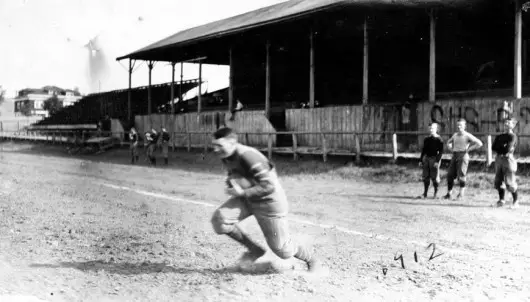
The 1912 Oregon State-Oregon game was played in Albany.  (©UO Special Collections)


There was a time (1911) where the Civil War football game was canceled outright for fear it was simply too dangerous for those who would be in attendance after fights and “general hooliganism,” instigated by Oregon State fans following their victory in Corvallis, had occurred the year before. Games have been played in Albany and Portland in the hopes that a neutral setting might stem the inevitable tide of nastiness, with expectedly poor results. Regardless of location the festive nature brought about when the Ducks and Beavers mingle remains decidedly hostile.

But perhaps no moment in time has personified all that encompasses the in-state rivalry and proper namesake of “Civil War” better than the 1937 game and subsequent riot; when Oregon State may have won the battle, but the Ducks won the war. It was in fact the moment that the name Civil War was earned for the rivalry, the now infamous moniker first being used by the Eugene Register Guard to describe the chaotic events that followed the 1937 Oregon State-Oregon football game.

PREPARING THE FIELD FOR BATTLE

1937 would prove a down year for both Oregon schools, the Oregon State College (O.S.C) Aggies as they were then officially known, though the nickname Beavers was commonly used, finished 2-2-3. The Oregon Webfoots fared worse, finishing a dismal 2-5. For both teams, no matchup was more important than the October 23rd, 1937 rivalry game to be played at Hayward Field in Eugene. It was homecoming for Oregon, and nothing would make the OSC faithful happier than to spoil Oregon’s party.

Students prepare the O on Skinner’s Butte for homecoming. (©UO Special Collections)

Great festivities were planned for the returning alumni, students, and fans. Fraternity row was adorned with inventive homecoming signs poking fun at the Beavers for the annual sign contest (Theta Chi won the award for best homecoming sign), a Friday night dance featuring the music of jazz artist Paul Whiteman was planned at Mac Court, finishing touches were being made by the freshmen class on the annual bonfire pyre for the noise parade and pep rally, the O on Skinner’s Butte was given a fresh paint job in keeping with homecoming tradition, the formal dedication of the new library building, and world-renowned Italian opera singer Amelita Galli-Curci was scheduled to give a concert at McArthur Court the day after the game.

Paul Whiteman performing at the Homecoming Dance 1937. (©UO Special Collections)


Record crowds were anticipated for the Hayward Field stands, with trains coming from Portland and other communities packed to the brim with eager alumni. Luncheons, dinners, dances, visiting old stomping grounds, seeing old friends, pep rallies, noise parades, and football; it had everything a homecoming weekend should be.

Hayward Field, a dusty dirt patch turned mud bog when the fall rains came with nary a blade of grass visible, was getting a much-needed facelift for the big day. Students and faculty had worked hard to raise funds necessary to purchase sod for the first time, with the new green grass field installed by grounds crew a couple days before kickoff. The field itself would prove to be the first shot fired, like Fort Sumter 75 years prior, in what would henceforth become known after the weekend’s unscheduled events as the Civil War.

OREGON STATE PROVOKES A CIVIL WAR


The new grass turf at Hayward got branded by Oregon State fans. 
(©UO Special Collections)

Oregon State fans, wanting to make their own mark on the upcoming events, did so quite literally, traveling to Eugene in the middle of the night and burning the letters O.S.C. onto Hayward’s brand new grass field. 

For added insult, they also painted the Oregon O on Skinner’s Butte an unsightly orange, a site which was traditionally protected at night during homecoming by freshmen tasked with preserving the O’s integrity in the lead-up to the game, but had been found conspicuously unguarded. OSC had stirred the hornet’s nest, it would not be the only provocation.

OSC’s unsightly graffiti aside, the mood remained festive for the weekend. The “Pep Patrol” and Order of the O vigilantly kept up homecoming traditions, treating violators of the unwritten rules to an unwelcomed dip in the senior fountain or public paddling on the steps of Fenton Hall.


Student gets paddled on the steps of Fenton Hall by the Order of the O. 


(©UO Special Collections)

“Criminal acts” such as not saying hello to every passer-by along Hello Walk (the path on the old campus between Villard Hall and Friendly Hall), freshmen getting caught wearing a tie or not in possession of their green beanie, and being deemed as failing to show proper school spirit all resulted in unplanned baths and sore buttocks for the rule-breakers.
Homecoming weekend began with the formal dedication of the new University Library. Dr. John Henry Nash of San Francisco provided the principal address, stating, “The library is the very soul of an institution of higher learning.[1]” Friday evening festivities began with the annual Noise Parade, a chaotic train of flatbed trucks overflowing with students causing as much of an audible cacophony as possible.

The parade was its usual affair, a tradition of rowdiness with fraternities and sororities set up on truck beds with the most annoying, aggravating, ear-splitting mechanisms and bells they could muster to drive through Eugene making the loudest racket possible, in theory rallying the crowd for the next day’s game while probably causing headaches more than anything.

The 1937 Homecoming Noise Parade Rally in downtown Eugene. (©UO Special Collections)

The parade followed its typical route from campus to downtown then down Willamette and back to campus by Hayward Field, where those that hadn’t been turned deaf throughout town from the 120+ decibel consistent drone of parading greeks with air horns awaited the start of the pep rally.

It was tradition for the freshmen class to build a large bonfire near Hayward Field, then guard it (along with the O on Skinner’s Butte) with their lives to prevent any eager Beavers from prematurely igniting the tower. This was a common practice, tried by both sides repeatedly, but only accomplished on a couple occasions.

While the frosh were unsuccessful in protecting the O, the bonfire went off without a hitch. Speeches were made by Oregon football coach Tex Oliver and others, and the rally squad with Puddles in tow (the live duck mascot, not the costumed one we know today) got the crowd into a fever pitch for the lighting of the wooden tower.

1937 Homecoming sign. (©UO Special Collections)

With the bonfire sending embers into the night sky, people made their way to McArthur Court for the big homecoming dance, featuring world-famous jazz musician Paul Whiteman and his orchestra. It was an almost flawless opening (OSC vandals aside) to another great homecoming weekend, which would quickly turn sour the next day when Beavers had to spoil the party.

RAMBUNCTIOUS BEAVERS WON’T LET SLEEPING DUCKS LIE

The 1937 Oregon State-Oregon football game proved to match the crowd expectations and more, with the stands overflowing maxing out near 20,000 spectators, the largest ever to witness a game at Hayward Field. The game however, would prove disappointing to the festive atmosphere created by the crowd and supporters.

The Oregon cheerleaders had a little antagonistic trick of their own up their sleeves for the Oregon State fans in attendance before kickoff, parading a cow on the back of a truck around the Hayward track mocking the OSC fans with shouts relating the cow to that of a lost sibling or parent. Oregon State would quickly get its revenge, several students kidnapping Puddles when its caretakers weren’t watching the beloved Oregon mascot, holding the duck hostage on the OSC sideline for much of the day.

Cheerleaders parading a cow around Hayward Field. (©UO Special Collections)


The game would prove rather fruitless for Oregon though, unable to find a way to stop Oregon State’s dynamic quarterback Joe “The Ghost” Gray. It was a 0-0 deadlocked campaign until the 4th quarter with some unlucky breaks leading to OSU carrying the momentum for much of the game, until Gray connected on a 17-yard touchdown pass to give the Beavers a 7-0 lead.

A couple minutes later a fumble by Oregon receiver Victor Reginato on Oregon’s own 23 yard line was recovered by OSC’s Jay Mercer, a Eugene High School graduate. It took only one play for the Ghost to capitalize, running around the left end and reaching paydirt. to extend the lead to 14-0. Oregon responded, returning the kickoff for a touchdown, but it was called back on a penalty, and a drive couldn’t be sustained against OSU’s defense.

It remained 14-0 in the final minute with the teams near the south endzone, but OSC fans decided it was time to celebrate, even with the game still ongoing. While the crowd focused on the action at the opposite end, a group of Beaver fans ran into the north endzone and began ripping down the goalpost. An at first shocked crowd soon turned into an angry rabble pleading for a response from the UO student section, which was quickly obliged with around 50 students pouring onto the field to protect it from the rampaging Beavers.

A brawl quickly broke out while the majority watched and shouted. One Beaver fan standing on top of the goalposts had his pants completely ripped off by the students yanking to bring him down from below, while projectiles and punches were thrown on both sides of the melee, lasting well after the final whistle to the now far less interesting football game compared to the bitter and ever-expanding brawl on the opposite end of the field.

View of the 1937 homecoming game from the Hayward Field grandstands. (©UO Special Collections)


Eventually, despite the best efforts of Oregon students, the goalposts did come crashing down, and were triumphantly carried through campus to 15th street by OSC students. Their march of victory was a battle in of itself, students and local townspeople crowding the street throwing ripe fruit and water balloons at the invaders. The football game was over, Oregon had lost both the game and the ensuing brawl, and eventually the triumphant OSC rooters triumphantly made their way back to Corvallis.

But the on-field fight Saturday would prove to only be the start of the conflict…

HOMECOMING CONTINUES

With Hayward Field in tatters and missing one goalpost, the nearby streets covered in rotting fruit, and fans exhausted; attention turned to the reunion dinners held by fraternities and sororities Saturday evening for the returning alumni. Homecoming weekend was rounded out with Amelita Galli-Curci’s concert at McArthur Court the following afternoon. 

She had arrived just in town just in time to be in attendance for the game the previous day, and praised the festive atmosphere at the school, despite the surprising and somewhat unsightly events after the football match had concluded.

Amelita Galli-Curci arrives in Eugene for 1937 homecoming. (©UO Special Collections)


With the concert over, Homecoming had come to a close. Fans maligned the 14-0 loss to the hated Aggies from Corvallis, but undeniably the other festivities surrounding the weekend had been an overwhelming success. Students prepared for classes Monday morning, with thoughts of revenge for next year’s rematch.

That should have been the end of it, but some Oregon State fans decided that they just weren’t satisfied enough and needed just a little bit more. The scene in Corvallis following the game and Sunday had been a jubilant celebration stretching late into the evening, and when Monday morning came around some 2,000 students decided that they wanted to extend the party, get one more chance to rub the win in Oregon’s face.

OSC ANTAGONIZING GOES TOO FAR

OSC students piled on to vehicles, some as many as 15 onto one car, and made the slow 40 mile trip down to Eugene, arriving around 11am. Their arrival had been tipped off to the UO and the local papers and police by an intrepid reporter in Junction City, who noticed the odd caravan of corn-wielding students headed towards Eugene.

Oregon State students parading through Oregon’s campus. (©UO Special Collections)

Waving corn stalks at students as they paraded around the campus streets to shouts of “DUCK SOUP!”, they were met with confused looks that turned instead to tacks being thrown on the street in front of their vehicles and tossed water balloons and tomatoes. Some Law students in class, noticing the racket being raised outside, managed to hook up a firehose and sprayed the invading passers-by from the second-story window.

Campus Police Officer Rhinesmith haplessly tried to preserve order of an escalating situation, while Dean of Men Virgil Earl tried to make it a friendly visit, inviting the university band to form and play a welcoming song to the visitors. City officials, recognizing a potential continuation of the riot on Saturday, asked police to provide an escort for the parading Beavers to avoid any further conflict and attempt to lead them back out of town…it only somewhat worked, as a few of the cars peeled off from the escort and made their way back to campus.

UO law students hook up a firehose to spray OSC cars passing by. (©UO Special Collections)

The scene turned ugly when classes got out around noon, with many of the OSC students, now on foot, gathered near the pioneer mother statue on campus smoking and looking to instigate trouble. Spotted by UO students, word spread quickly of the invaders on campus, and another fight quickly broke out on the lawn surrounding the statue. This fight did not escalate the way things had during the football game two days prior, and quickly died down after only a couple minutes of punches being thrown, but it would prove to be just the eye of the storm.

Most of the OSC fans had quietly headed back to Corvallis under the strong urging of the Eugene Police Dept., but some 200 that had participated in the pioneer mother brawl still remained roaming campus and Eugene. It was quite a list of accomplishments for the OSC students all things considered.

In a three-day stretch they had managed to:
1) Paint the O on Skinner’s Butte orange
2) Burn OSC onto the brand new grass turf of Hayward Field
3) Kidnapped Puddles – the Oregon live duck mascot
4) Won the annual football game
5) Torn down a Hayward Field goalpost and paraded it through Eugene
6) Started two fights on campus
7) Held a victory parade through the UO campus two days after the game

For any sane invader in enemy territory this should have been a wildly successful campaign, but even the most passive of webfoots could only be pushed so far before it was time to exact revenge.

OSC fan captured by UO students. (©UO Special Collections)


ALL OUT WAR IS DECLARED

The crowd starts to gather outside Seymour’s Cafe, where OSC fans had barricaded themselves inside. (©UO Special Collections)


The straggling OSC crew left campus to find some food, taking over Seymour’s Cafe in downtown Eugene for a victory meal. Little did they notice until it was too late the group of angry students looking for blood gathering outside, fresh out of class and hearing word of the recent fight on campus, still sour over the events of Saturday. Within minutes Seymour Cafe’s was completely surrounded by a rowdy mob of students, blocking all traffic and sending police scrambling back to downtown after escorting the rest of the OSC ramble back north. They could do little to quell the gathering storm.

As the Register Guard described the following events, “They asked for it, got it! The guerilla warfare soon made Eugene look like Shanghai.” While around 100 OSC fans barricaded themselves inside Seymour’s with the angry mob outside trying to get in, any straggling Beaver not inside the safety of the diner was captured and dragged to the Millrace, and tossed into the icy cold stream.

The barricades back at Seymour’s didn’t hold for long, with Seymour’s management aiding in the removal of the OSC invaders out of their business before the windows and walls suffered any more damage from the hundreds gathered in the street demanding Beaver hide. All Oregon State fans were quickly captured in the masses and either escorted or dragged to the Millrace for their well-deserved dip in the frigid waters along with their brethren.

The vehicles of the OSC students were overturned and vandalized, with the police only mildly attempting to preserve order, knowing that after the events of Saturday and returning to Eugene to instigate more trouble, those students probably deserved their come-uppin’s.

A captured Beaver is carried off to be Millrace’d. (©UO Special Collections)


But a dunk in the Millrace drink itself wasn’t proper humiliation after all the affronts done by the outnumbered OSC’ers. The crowd made their way to the top of Skinner’s Butte with all captured foes in tow. Hair clippers emerged and many of the Beavers got their heads shaved, then were forced to paint the O on the Butte back to yellow in the traditional manner…by sliding down it with paint on their pants until trousers were completely tattered, some stripped of most of their clothes before enduring the humiliating paint slide. This was a fate normally reserved for freshmen initiations, but for the instigators none would be allowed to escape until clothing and bodies were thoroughly ransacked, freshly shaved, and almost completely covered head to toe in yellow paint.

An Oregon State fan is forced to “Paint the O”. (©UO Special Collections)


With the O back to its pristine yellow and all Beavers cold, shivering, barely clothed and shoeless, and bright yellow; they were unceremoniously sent on their way back to their trashed overturned vehicles with a warning to get out of town. The war was officially over, Oregon had gotten its revenge.

The next day the frontpage of every Oregon paper ran with headlines similar to that of the Register Guard’s, “OSC INVADES EUGENE: WAR FOLLOWS.” The articles would for the first time describe the events of the clash between Duck and Beaver as a “Civil War.” The term would stick, as both sides planned their revenge for the 1938 rematch.

REPERCUSSIONS, AND THE ONGOING CIVIL WAR CONTINUES

The OSC invaders didn’t escape the riot without some war reparations. Many were called into court in Junction City to face the wrath of Carl Bilrup, Justice of the Peace. But recognizing the bad haircuts, yellow paint chips, and black eyes sported by those involved, Bilrup was surprisingly lenient on the gang, warning them not to “parade a main state highway with gangs of excited boys and girls clinging to radiators and running boards. Enthusiasm is beautiful, but as for rowdyism, it isn’t done.”

OSC students traveling to Eugene to start what became the 1937 Civil War riot. (©UO Special Collections)


Only light penalties deemed to be all in fun and boys will be boys were issued, but with the stern warning that it better not happen again. Despite the fun college spirit, it had been fortunate that only light property damage and no major injuries or deaths had occurred, if future events were to happen again the participants might not be so lucky next time.

Community members did display concern to temper “the old college spirit” of Joe College, citing how lucky it was for all involved to have escaped without serious injury or death; just a few bumps, damaged vehicles, and bruised egos.

Letters to the editor for the papers in both communities received pleas to end the annual affair citing public safety, but this was dismissed by most. It had been tried once before, in 1911 after fights broke out after the game, and a year off did little to prevent hostilities. As much as some loathed the riot scenes, the real tragedy would have been not having an opportunity to get even on the football field the next year and future battles.

The years would go by, and only in 1943 and 1944 would there be seasons that Oregon State and Oregon didn’t renew their rivalry, neither school able to field a team with most of the male student body oversees fighting in World War II. In 1945 the teams played twice in a shortened and rushed season where both schools could barely field rosters of athletes fresh from the front-lines at war’s end, but in the time since there has always been the annual Civil War game.
The antagonistic incidents between fans would continue as they do to this day, both big and small. That’s what makes rivalries great, and despite the occasional outcry when it is pushed a little too far, thankfully nothing has gone quite as over the top as the incidents of 1937. It is indeed a civil war.

Recap of the 1937 Civil War riot from the 1938 Oregana (UO yearbook). (©UO Special Collections)


Other notable incidents in the Civil War series:
  • 1940 – Following Oregon’s Civil War victory in Corvallis, members of Beta Theta Pi fraternity tore down the goalpost at Bell Field and brought it all the way back to Eugene, parading the OSC goal post throughout Mac Court during a postgame celebration dance.
  • 1946 – Oregon State students kidnap Oregon’s beloved duck mascot, Puddles.
  • 1954 – A group of about 50 Oregon students made the trip up to Corvallis during OSU’s homecoming, and in the middle of the night prematurely ignited the Beaver bonfire. Some of the UO students were captured, had their heads shaved, and painted orange and black. One famously was forcefully paraded through OSU’s campus wearing a sign that read “I’m a Dumb Duck.”
  • 1960 – Oregon students pose as reporters during OSU’s homecoming, approach the homecoming royal court for a photograph, and promptly kidnap the homecoming queen and the other members of the court. A ransom note was received by OSU student body president Dick Seideman shortly thereafter demanding that he ride to the corner of 13th & University at the UO campus on a kid’s scooter and make a public appeal for the return of the homecoming queen. The Homecoming Queen was returned unharmed after a stay at a parent’s house, without OSU’s student body president having to ride a child’s scooter to Eugene.
  • 1972 – In a reverse of roles of the 1937 riot, in the final moments of the 1972 Civil War game in Corvallis game Oregon students stormed the field and attempted to tear down the south goal post. When the Duck crowd then tried to go after the north end goal posts they were met at midfield by a large contingent of OSU students, sparking a postgame brawl on the field.
  • 2000 – The rivalry in the stands leads to bitterness among the mascots, as a fist fight breaks out between Benny Beaver and the Oregon Duck during the game. Both mascots are ejected.
  • 2010 – Duck fans storm the field in Corvallis after Oregon’s victory, sending the UO to the BCS national championship for the first time in school history. During the celebration, a fan sets an OSU shirt on fire, damaging the field.
Students parade the Oregon State goalposts around Mac Court in 1940. (©UO Special Collections)


Thursday, January 23, 2014

A look back at Oregon’s facilities: the secret to UO’s success?

A look back at Oregon’s facilities: the secret to UO’s success? 
 
Originally posted on FishDuck.com on January 11th, 2012 
 
Ask anybody in the country today their impression of University of Oregon athletics, and three words will immediately be uttered: uniforms, Nike, facilities.  Oregon’s facilities now are the envy of the country, even many pro teams don’t have the plush amenities that Oregon athletes appreciate today.  It didn’t happen overnight though, and over the years of the University of Oregon’s rich history many facilities outgrew their use, many being retired, many others being used long past their usefulness out of necessity.

Villard Hall and Deady Hall stick out in the pastoral lands of the University of Oregon campus circa 1901 

With all the talk about facilities, let’s take a look at the history of the venues that have housed the athletes of Oregon past and present, and all it has taken to rebuild the University of Oregon campus from humble old place of learning to athletic jewel of the west.

1873 construction of Deady Hall began, the start of the University of Oregon.  Four years later a baseball game was held between UO and Monmouth College.  In the first inning Monmouth scored 17 runs, an inauspicious start for the Webfoots, marking the beginning of many more days of sorrow, and some of great triumph and glory, to follow over the course of the next 145 years to present day.

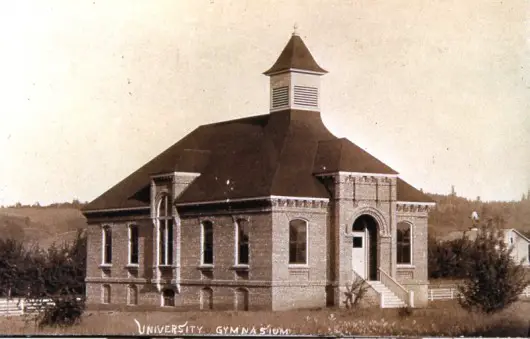
Initially the third floor of Deady Hall was reserved as a men’s gymnasium, but the construction of a gym in 1881 replaced the need for this space.  In 1890 a larger gymnasium was constructed, housing men’s athletics (all male students were required to exercise twice a week).  By 1909 a new gymnasium was built to house men’s athletic, while the 1890 gym became the women’s gym.  It burned down in 1922.

Oregon's first football game was played against Albany College in 1893, a 44-2 Oregon victory 

Organized athletics were still in its infancy at the time, while back east collegiate football had been played for some time, in the west collegiate athletics barely registered.  The first Oregon football game took place in on March 24th, 1893, in an open field in the shadows of Deady Hall, where Oregon (coached by Cal Young) defeated Albany College 44-2.

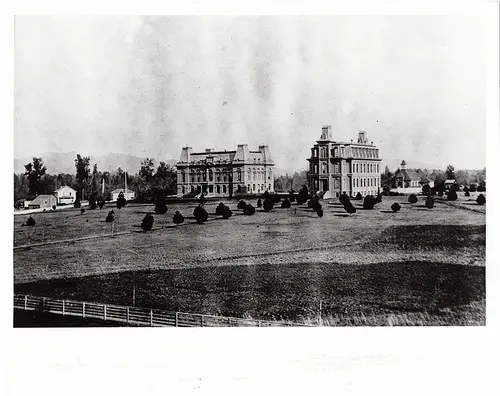
Around this same time a running track was built at the corner of 13th and A Street (now Kincaid Street), as indicated on this campus map from 1894.


1894 campus map. Things have changed quite a bit in the past 118 years…
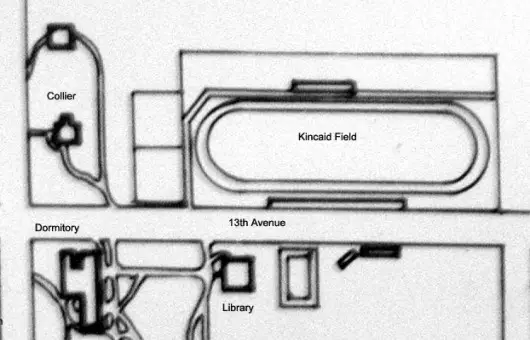
This track would become the site of the first official Oregon athletic facility, Kincaid Field.  Bleachers were constructed in 1902, with the university acquiring the property along 13thavenue for an all-purpose venue to hold the Webfoots football and track&field events.  Students helped construct the bleachers that would hold the crowds that cheered on Oregon’s highly successful football program in those early days led by coaching legend Hugo Bezdek.  With more sports being added (women’s tennis became Oregon’s first female sport in 1909) and collegiate sports gaining in popularity, the need for more buildings to house Oregon’s athletics was apparent.  To facilitate larger crowds for big events, often football games were held in Portland at Multnomah Field for matchups that were expected to far exceed what the stands at Kincaid Field could hold.

Kincaid Field, the original home of the Oregon football team
The pinnacle of these early days came in 1916, the Webfoots football team finished with a 6-0-1 record and represented the Pacific Coast Conference in the 1917 East-West Tournament Game, later known as the Rose Bowl.  Oregon defeated Penn in the 1917 East-West Tournament Game 14-0, putting Oregon on the map as a powerhouse in collegiate athletics on the west
coast.  With Hugo Bezdek as coach of the Oregon football, baseball, and basketball teams and the school’s first athletic director, the Webfoots were formidable.


A plaque now marks the site of Kincaid Field
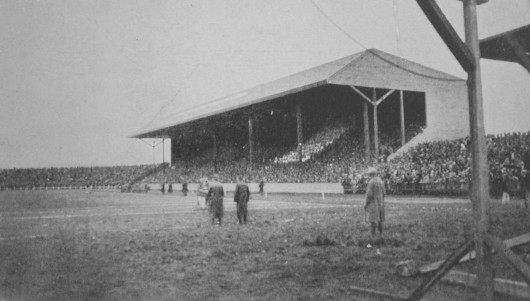
With the success of the Bezdek era came increased crowds, and it became clear that Kincaid Field could no longer keep up with demand, construction began on a larger facility to house Oregon’s football and track programs, Hayward Field.  Built in 1919, its inaugural season saw Oregon’s football team continue its dominance, once again representing the PCC in the 1920 East-West Tournament Game.

The new facility was named Hayward Field to honor the track coach and trainer Bill Hayward (Oregon track coach 1903-1947) during a ceremony on November 15th, 1919 during the game against bitter rival Oregon Agricultural College (now Oregon State).  The Webfoots won the game 9-0, but the ceremony honoring the longtime coach Hayward with the name of the facility was noticeably absent one person, Bill Hayward.  Nobody had bothered to inform him in advance of the ceremony taking place, and he was back in the locker room providing treatment for the football team at the time.  Coach Hayward did not discover that the new stadium had been named after him until he read about it in the newspaper the following morning.

Hayward Field replaced Kincaid Field in 1919 for football, and added a track in 1921
In 1921 a six-lane cinder track was added surrounding the football field to allow for track events, marking the end of Kincaid Field’s usefulness.  With Hayward Field now capable of holding football and track&field events, Kincaid Field was closed in 1922.  A plaque near the northwest corner of the Museum of Art commemorates the athletes who competed at the site where Kincaid Field once stood.
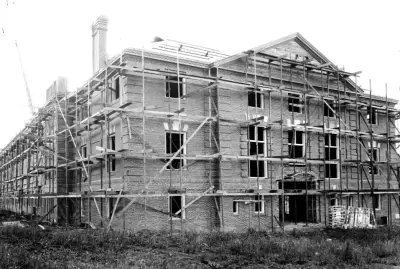
Gerlinger Hall, site of women's athletics for many years, here seen under construction in 1919
While construction of Hayward Field was taking place, nearby another building was also taking shape, Gerlinger Hall.  Built 1919-1921, it replaced the “old gym” as it was known as a new place to house women’s athletics.  The timing turned out to be rather apt, as the old gym burned down in 1922.

The gymnasium, built in 1890, housed many of Oregon's athletics, before a new gym was built in 1909 and this became the women's gym. It burned down in 1922. 

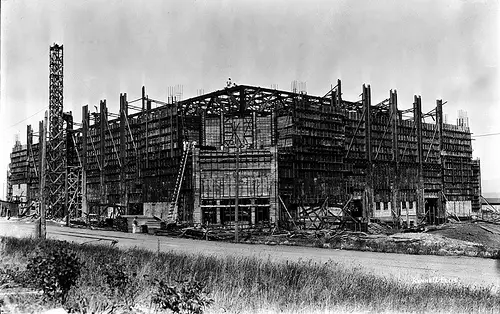
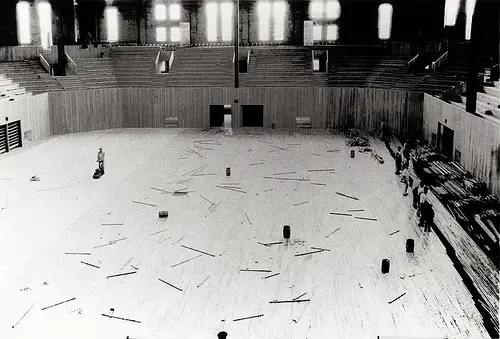
While football and track enjoyed the cozy confines of their new facility, basketball was facing an arena issue of its own, its popularity far exceeding the space available in the men’s gymnasium.  Starting in 1926, construction of a new facility to house basketball and other athletics began, McArthur Court.

Construction of McArthur Court began in 1926 

McArthur Court was a grand multi-purpose facility, named after Clifton McArthur, prominent UO athlete and first student-body president who later became Congressman McArthur.  By 1927 the new building was complete and ready for its debut, a 38-10 victory over Willamette University on January 14th, 1927. 

The new arena featured a capacity in excess of 6,000 (later expanded to seat over 9,000) and athletic offices in the lower level, it was a huge step forward in athletic facilities at the time for the university, though its construction cost was sizable.  To fund the construction a $15 fee was added by the Associated Students of the University of Oregon, once finally paid off students held an extravagant “mortgage papers burning” ceremony to mark the end of the imposed arena fees.


Installation of McArthur Court's wood floor is underway in 1926 

In 1937 repairs were made to the roof.  Other improvements followed in the 40s and 50s, including the addition of the familiar exterior steel support structures above the roof.  Mac Court, or “The Igloo” as it was originally nicknamed later to be known as “The Pit,” proved valuable well past its expiration date.  Only recently replaced by the construction of the Matt Knight Arena, it was the centerpiece of Oregon athletics for almost 85 years, becoming the second oldest collegiate basketball arena in the nation behind only Fordham University’s Rose Hill Gym.

McArthur Court, named after the first student body president Clifton McArthur 

For decades minor projects continued, improvements here and there, some older buildings demolished for new structures, but the athletic arenas remained relatively intact.  Hayward Field hosted football and track&field, Mac Court had basketball, Gerlinger Hall housed women’s athletics.
 
But by the late 1950s, it was obvious that football had outgrown Hayward Field and a new stadium would need to be built, even with Oregon playing typically only three games a year on campus at Hayward.  In 1959 the university purchased 90 acres of land on the north side of the Willamette River.  By 1966 construction was underway for a new stadium, the new mecca of Oregon football, Autzen Stadium.  Completed in 1967 just days before the first game slated for September 23rd, 1967, the design instituting an artificial crater with the removed dirt forming the slopes that the grandstands were built upon.


Oregon lost the first game held at Autzen Stadium 17-13 vs Colorado in 1967 

John Harrington was Oregon’s starting quarterback for that first game, a close 17-13 loss to Colorado.  Years later John’s son Joey Harrington would become arguably the most iconic student-athlete in the history of the program through repeated triumphs in the stadium his father helped open.  Autzen featured a grass surface in its first two years of existence, but with the wet climate it was determined it would be far easier and cheaper to replace it with artificial turf.

Finances were a big issue, stark contrast to today’s athletic program.  The university in the 1970s and 1980s was strapped for cash, and Autzen Stadium proved to be a financial boon for the program, acting as a host for many summer concerts that would help fund the athletics in the fall.  Often it was the student-athletes directing traffic in the parking lot or acting as security at events while artists such as the Grateful Dead and Bob Dylan would rock Autzen.
 
Meanwhile with football now vacated from Hayward Field, it became a full-time track & field facility.  The track was expanded to 8-lanes, and altered to an all-weather rubber surface.  With these improvements and the track program flourishing under legendary coach Bill Bowerman and buzz emerging from a brash young runner named Steve Prefontaine, it was decided that Hayward should host the Olympic Trials in 1972.  Hayward Field would again host the Olympic Trials in 1976 and 1980, and following an expansion/renovation in 2004 the trials returned to the holy ground of track & field in the city commonly referred to as Tracktown U.S.A.  In 2012 Hayward Field will once again be the site where athletes make their first step towards Olympic glory with the trials, scheduled to take place at venerable Hayward Field June 22nd – July 1st.
 
Women’s basketball made its debut inside Mac Court in 1974, but facing harsh budget cuts Oregon’s successful baseball program had to be cut in 1980.  Football was also on life support, dealing with NCAA sanctions for rules violations and the sub-par facilities of the woefully small weight room behind the east endzone bleachers as part of the Barker Stadium Club expansion in 1981, and the locker rooms under the west endzone consisting of little more than three hooks and wood planks for each player.  It was clear that fundraising efforts would be needed to put Oregon in a position to be competitive with the rest of the conference.  So bad was Oregon’s football team in the 1970s, that there was talk of kicking them out of the Pacific Conference.

It was then that Oregon Athletic Director Bill Byrne developed a novel concept, to make money it was necessary to spend money.  Funding was raised for several projects to improve facilities that could then in turn fund further construction, beginning the cycle of modern Oregon athletics as we know it.  Better facilities would mean better recruiting, get better athletes to come to Oregon and the improved athletic play would lead to larger crowds, resulting in increased revenue.
 
It began with the sky-suite complex along the north rim of Autzen Stadium in 1988, moving the press box to the south side under the roof providing space for luxury suites that would serve as the prime financial support for future facilities.  Costing $2.3 million to build along with a million dollar press box on the opposite side, it was the first step towards transforming Oregon athletics from the antiquated humble cash-strapped program into the national powerhouse Oregon athletics have become.
 
The revenue earned through the leasing of the sky suites helped to fund the epicenter of Oregon athletics, the Casanova Center.  Located outside of Autzen Stadium, it was built to house all the athletic offices, replacing the overcrowded space beneath Mac Court.  Named after legendary coach and athletic director Len Casanova, it was expected to cost over nine million for its construction as part of a 14 million in total planned package to improve Oregon’s athletic facilities, paid for through state bonds and fundraising efforts, but costs inflated to over twelve million before its official dedication on September 27th, 1991. 

The new home to Oregon’s locker rooms, weight rooms, coaching offices and meeting areas, it didn’t come without controversy, as many in the community balked at the aesthetic additions to the grounds, such as sculptures that cost thousands deemed unnecessary by many.

Coinciding with the unveiling of the Cas Center, Autzen’s carpet also got an upgrade, removing the old Astroturf for a new Omniturf, designed to lessen the impact and turf-burns commonplace of the era from the hard artificial surfaces.  The concerted efforts to upgrade Oregon’s facilities coincided with improved on-field play, as Oregon fans reveled in Oregon’s first trip to a bowl game in 27 years when the Ducks won the 1989 Independence Bowl in Shreveport, LA.  This was followed the next year with an appearance in the 1990 Freedom Bowl, and it seemed like the program had turned the tide of the ugly days of consistent losing for decades.

Oregon’s athletic programs now had the means with which to compete on an even plane, and compete they did.  Oregon went from perennial cellar dweller to one of the most prominent programs on the west coast, and Autzen and Mac Court gained reputations as two of the loudest and most hostile environments for an opposing team to enter.

But costs were mounting, and facing budget cuts a controversial solution was proposed to offset expenses.  Oregon Sports Action began in 1991, legalized gambling on professional sports as a means to fund public university athletic programs.  While hindered with legal hassles from the get-go, Sports Action did provide much needed funding to the Oregon athletic program.
 
 
The watershed moment of this renaissance came in 1994, when the football team, picked to finish 9th in the conference that year, won the Pac-10 conference and was invited to play in the 1995 Rose Bowl, the school’s first appearance in the prestigious game since 1958.  The Ducks would lose to Penn State in the Rose Bowl, but the enthusiasm for Oregon sports created in the wake of that run to glory was undeniable.  Donations to the program flooded in, season ticket sales soared, suddenly there was nothing cooler than being an Oregon Duck.

Following an impressive 10-win season the next year that ended in bowl disappointment once more, a conversation between head football coach Mike Bellotti and prominent alum and Nike CEO Phil Knight would spark a movement lifting Oregon from being simply on par with their competition to pulling away from the pack with state-of-the-art facilities the envy of the world.  Following Oregon’s embarrassing loss to Colorado in the 1996 Cotton Bowl, Knight asked Bellotti what was needed for Oregon to remain competitive.  Bellotti responded that they needed an indoor practice facility.
 
Three years later, Bellotti had his indoor practice facility, and the rest of the conference began taking notice.  The Moshofsky Center opened in August of 1998 just in time for football season, sporting a complete artificial turf football field, a 4-lane running track, climate control, medical facilities, and batting cages.  Not only did it service student-athletes, but on gamedays “The Mo” as it is known became a hotspot for fans as well, providing space for food vendors and other gameday events catering to the fans, it has come to be called the world’s largest indoor tailgate party.  Inside the stadium fans were treated to something that had long been desired at Autzen Stadium, a video replay screen.

New turf was also installed in Autzen Stadium, and with the program now financially stable there was no longer a need to hold concerts or other events inside Autzen to balance the budget, Autzen would be the house of Oregon football and nothing more going forward.  The final concert held at Autzen was in 1997, featuring U2 and Rage Against the Machine.  A Rolling Stones concert had been discussed a few months later, but the university declined, angering many in the community when news of the refusal became public.

Outside the Moshofsky Center, sections of the Autzen parking lot were converted to football practice fields, soccer and lacrosse fields. The construction of the Moshofsky Center and the surrounding facilities did help improve Oregon compete with the top echelon of athletic programs across the nation, but it was not without its outspoken critics.  An outcry over the excess of spending on athletics while education programs were being ignored or outright cut at the university fell on largely deaf ears, and an arms race began that continues to this day.  Oregon builds a new facility, competing schools counter with an indoor practice facility or stadium improvement of their own.

The relationship between Nike and Oregon has blossomed in the time since that post-Cotton Bowl conversation between Knight and Bellotti, starting with a focused marketing effort on branding Oregon.  It worked. 

Over time the attempts to market the University of Oregon athletic program have increased in flash and innovation, from new uniforms to promotional campaigns.  Through Nike’s efforts working with the University of Oregon, the Ducks have gone from the laughing stock of the west to the most innovative futuristic program in the country, everyone knows about the Ducks, everyone wants to be like the Ducks.  If imitation is the greatest form of flattery, then the U of O is clearly the cool kid everyone is trying to follow, and with it the Ducks have gained not only a financial foothold to support the various sports but can recruit top-notch athletes on a national level.

Additional upgrades continue to be made.  In 2002 Autzen Stadium was renovated, expanding seating to 54,000 and further improving amenities available within the stadium.  So too were Oregon’s football locker rooms inside the Casanova Center, as well as improved treatment facilities and weight rooms.
 
 
The Jaqua Academic Center provides the best academic support structure for student-athletes in the country, and renovations to Hayward Field will permit the grand old mecca of track & field to continue to host national competitions.  The construction of PK Park east of Autzen Stadium signaled the return of the baseball program to Oregon athletics.  Further construction of the Casanova Center is currently underway, adding additional meeting rooms and state-of-the-art technology components to further prepare Oregon athletes for their competition.
 
Last year the newest upgrade was completed, with the opening of the Matthew Knight Arena.  Several years in the making with multiple mis-steps and hitches before its final completion, the arena replaces the beloved but well-past-retirement McArthur Court as the new home for Oregon’s indoor athletics.  It already in its short lifespan has hosted multiple concerts, a tennis tournament, and was highlighted by the Oregon men’s basketball team CBI Tournament Championship.
 
Once the scrappy but underfunded little guy, Oregon now is the big dog.  A program once hopeful to win a few games each year, the Ducks now have transformed over time into the home of innovation, new technology, the athletic elite.  So is it the facilities or the athletes that have led to Oregon’s vault into national prominence?  Perhaps both, the success on the field of athletic competition is determined through the effort given by the person behind the uniform, but by providing elite level facilities and great coaching (a hallmark of Oregon for over a hundred years as a coaching factory and stability in the various sports) it affords the modern Oregon student-athletes the tools needed to give their absolute best effort.
 
(all photos used courtesy of the Knight Library and UO special collections archive)